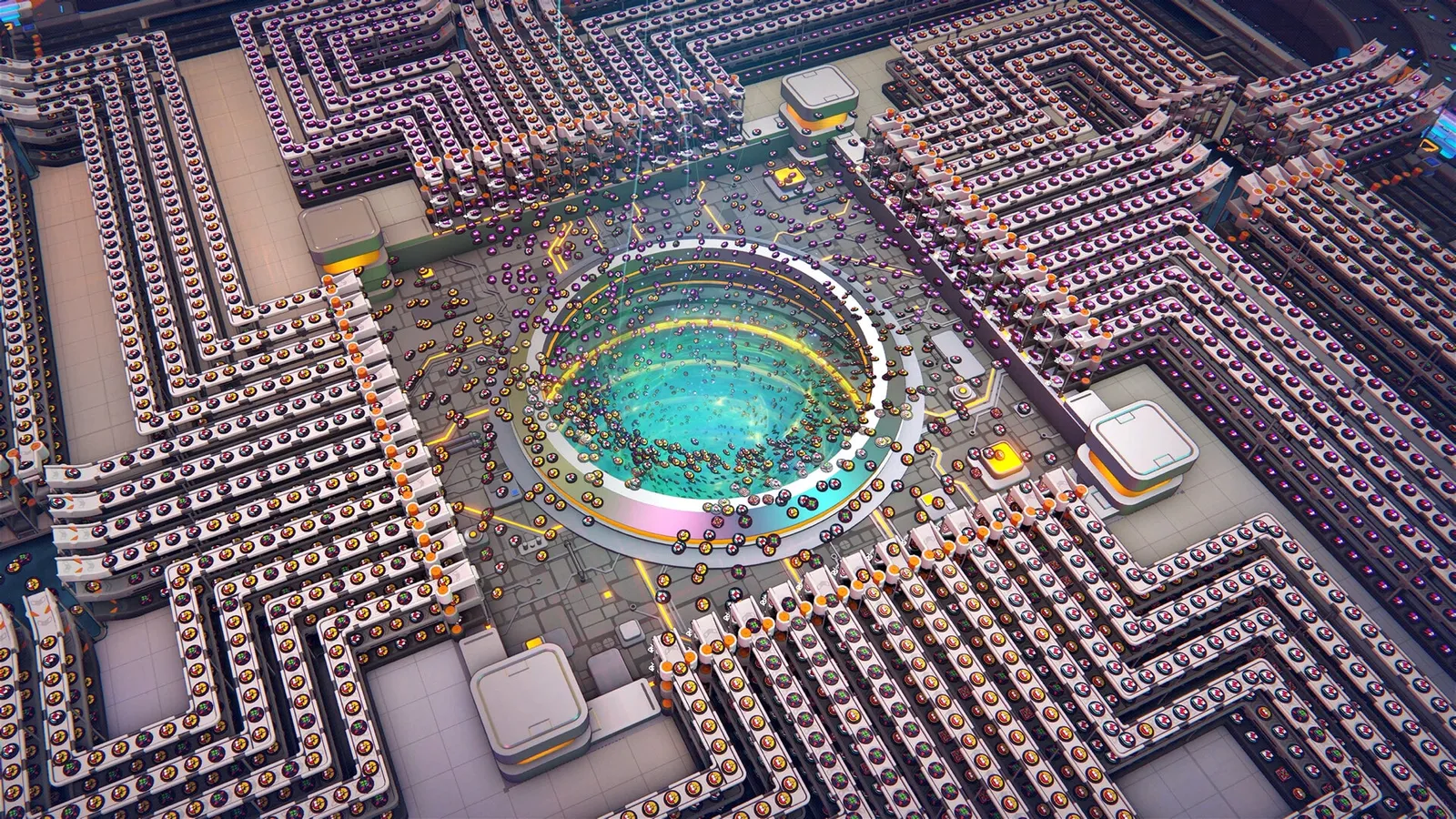
Satisfactory turns factory design into architecture: you do not just optimize a plan, you walk through it, climb it, and eventually see it dominate the landscape. Our desk scores it 99/100 - an essential pick.
What you actually do
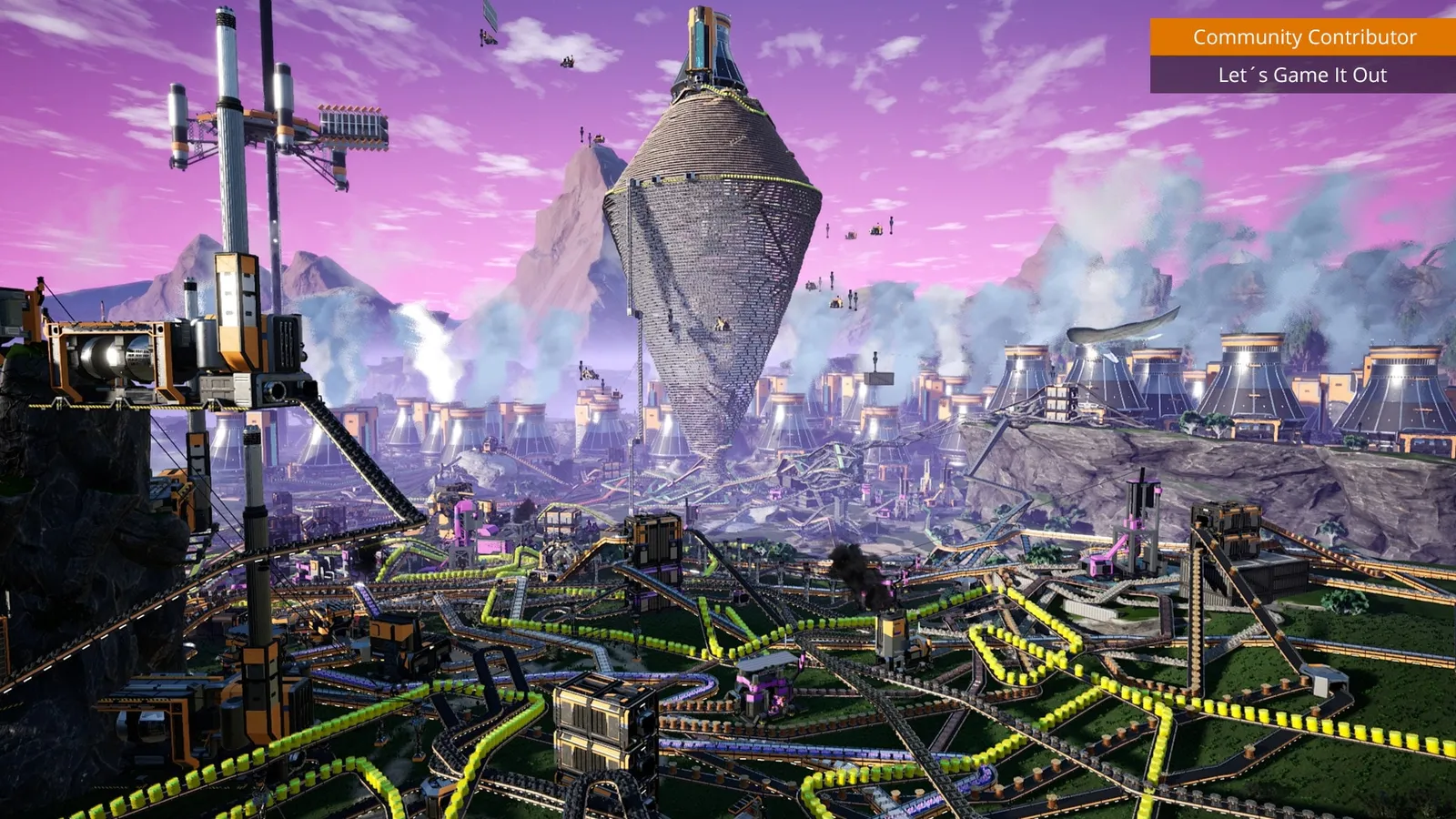
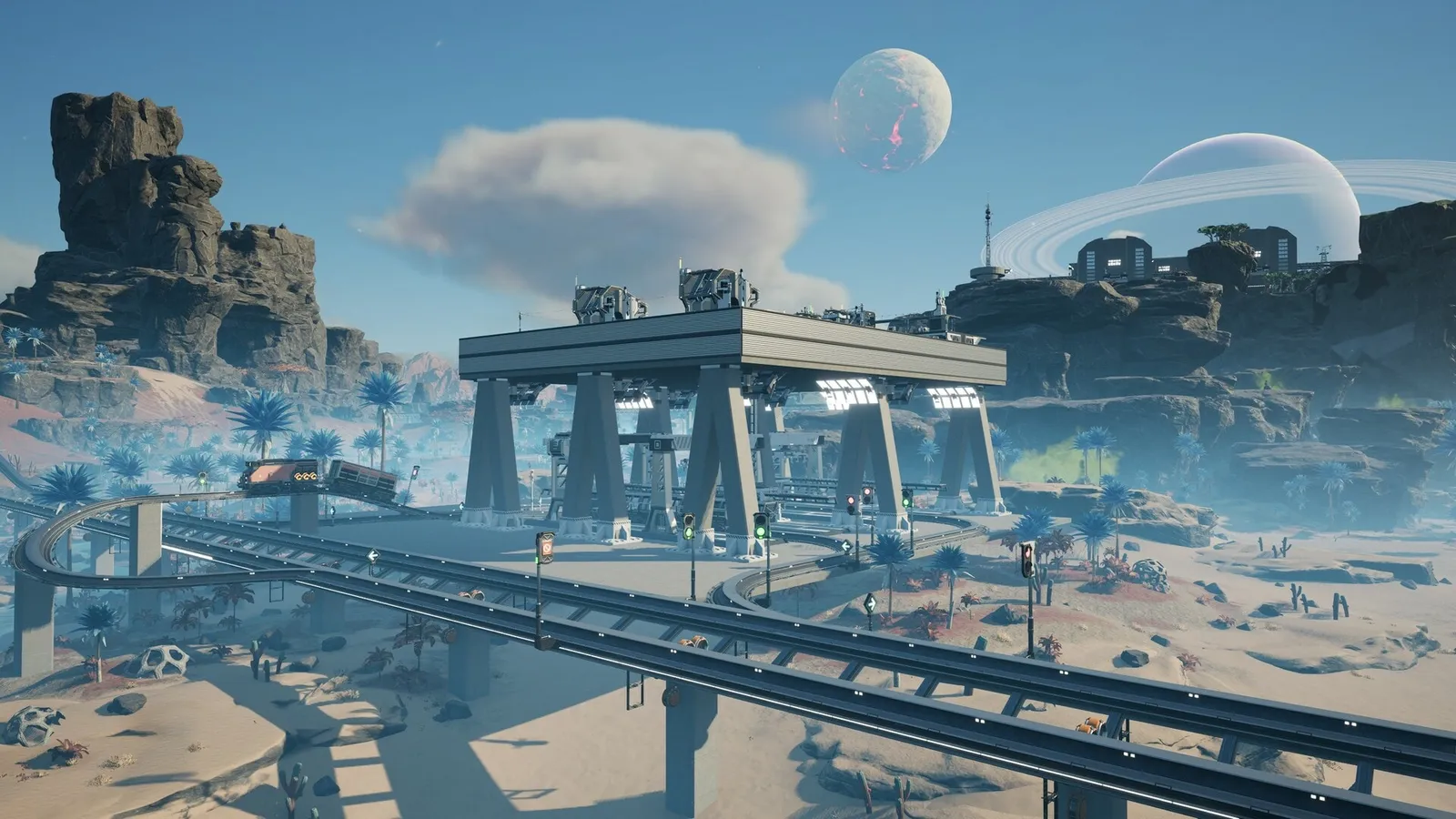
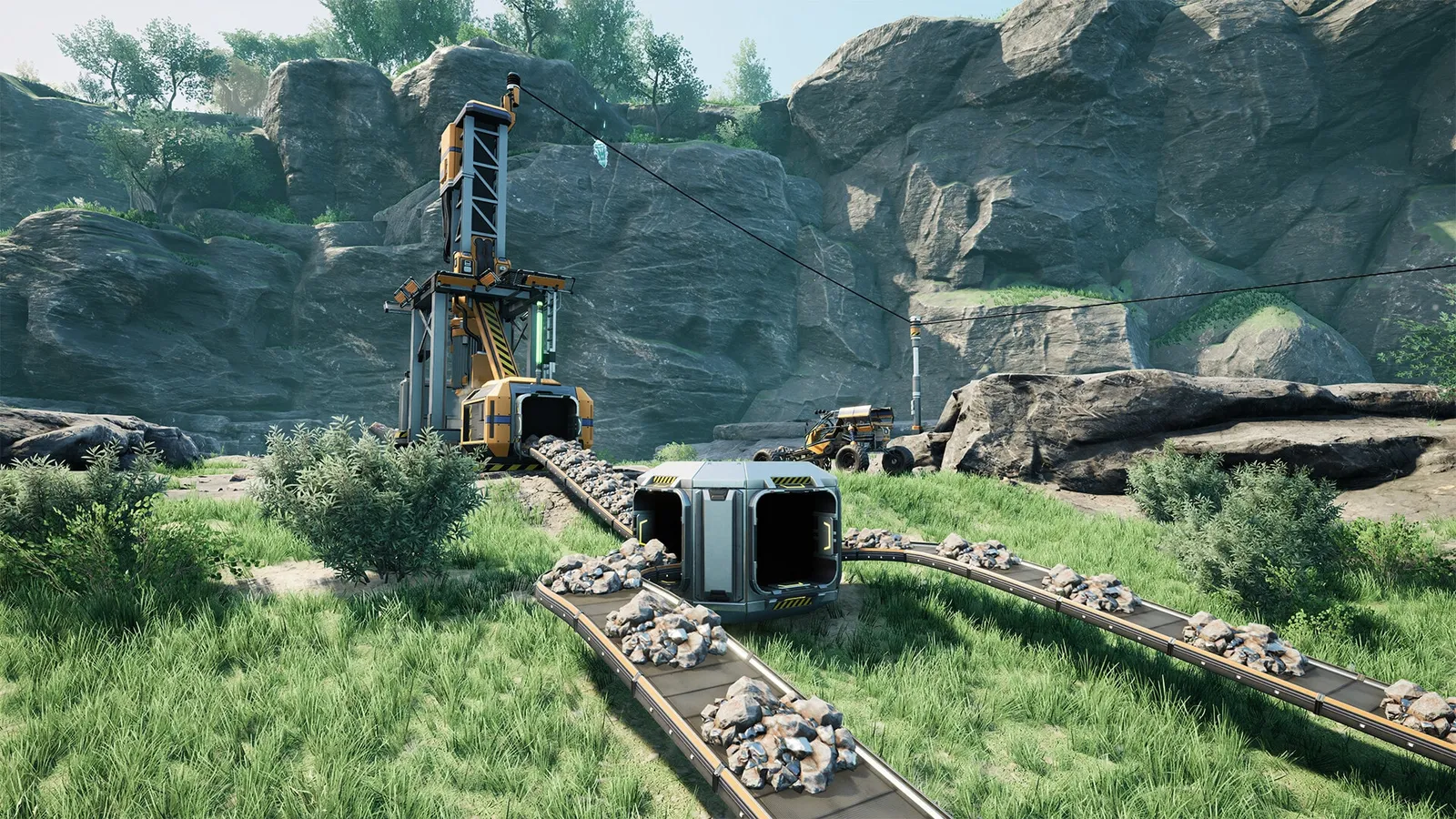
The first-person perspective changes the genre more than it sounds. Resource nodes become expeditions, belt lines become bridges, power plants become landmarks, and a bad layout is something you physically navigate before you decide to rebuild it.
Its best trick is making scale feel spectacular without abandoning factory math. You still care about rates, inputs, pipe flow, power load, logistics, and overbuilt production, but the reward is also visual: a working steel complex looks like a place.
The tradeoff is friction. Large rebuilds, vertical planning, and long-distance infrastructure can take real patience. When it clicks, though, Satisfactory offers a kind of industrial grandeur most top-down factory games cannot touch.
Where it shines
A few things Satisfactory gets right, and that keep players coming back:
+ In its favor
- Genre-defining — universally recommended as a starting point
- Drop-in co-op support for shared factories
- "Automation" is one of the genre's most rewarding loops
– Worth knowing
- Windows / Steam only for now
- Late-game factories can test hardware performance
Who it's for
Best for players who want automation, exploration, co-op, and dramatic 3D spaces in the same loop. It is not the fastest path to pure ratio solving.
The verdict
One of the strongest modern factory games, especially for players who want their logistics puzzle to feel physical and monumental.
Satisfactory sits in the front rank of the genre; if the loop above sounds like your kind of thing, it's an easy recommendation.