Mindustry and Factorio share enough DNA to invite comparison: drills, belts, power, production chains, research, base expansion, and the satisfaction of a factory that keeps itself alive.
The difference is pressure. Factorio is a deep factory automation game with combat attached to expansion. Mindustry is a factory-defense game where combat and logistics are welded together from the start.
Quick verdict
| Category | Winner | Why |
|---|---|---|
| Pure factory depth | Factorio | More production layers, trains, robots, circuits, fluids, and megabase tooling. |
| Combat integration | Mindustry | Supplying turrets and units is the core loop, not a side system. |
| Campaign pace | Mindustry | Shorter sectors create faster tactical factory problems. |
| Long-term scale | Factorio | Better for giant bases, long saves, and endless optimization. |
| Multiplayer conflict | Mindustry | Co-op and PvP fit naturally with its RTS/tower-defense structure. |
| Best first pick | Depends | Factorio for factory purity; Mindustry for action and shorter sessions. |
Round 1 - What each game wants from you
Factorio wants an engineer. It gives you a hostile planet, then asks you to automate science, expand resource outposts, build rail networks, solve oil, manage power, and eventually produce at absurd scale.
Mindustry wants a battlefield planner. You still build factories, but every line is judged by whether it can keep the core alive. Copper, lead, graphite, silicon, power, liquids, ammo, and units are not abstract throughput goals. They are the difference between holding the line and losing the sector.
Round 2 - Factory systems
Factorio wins.
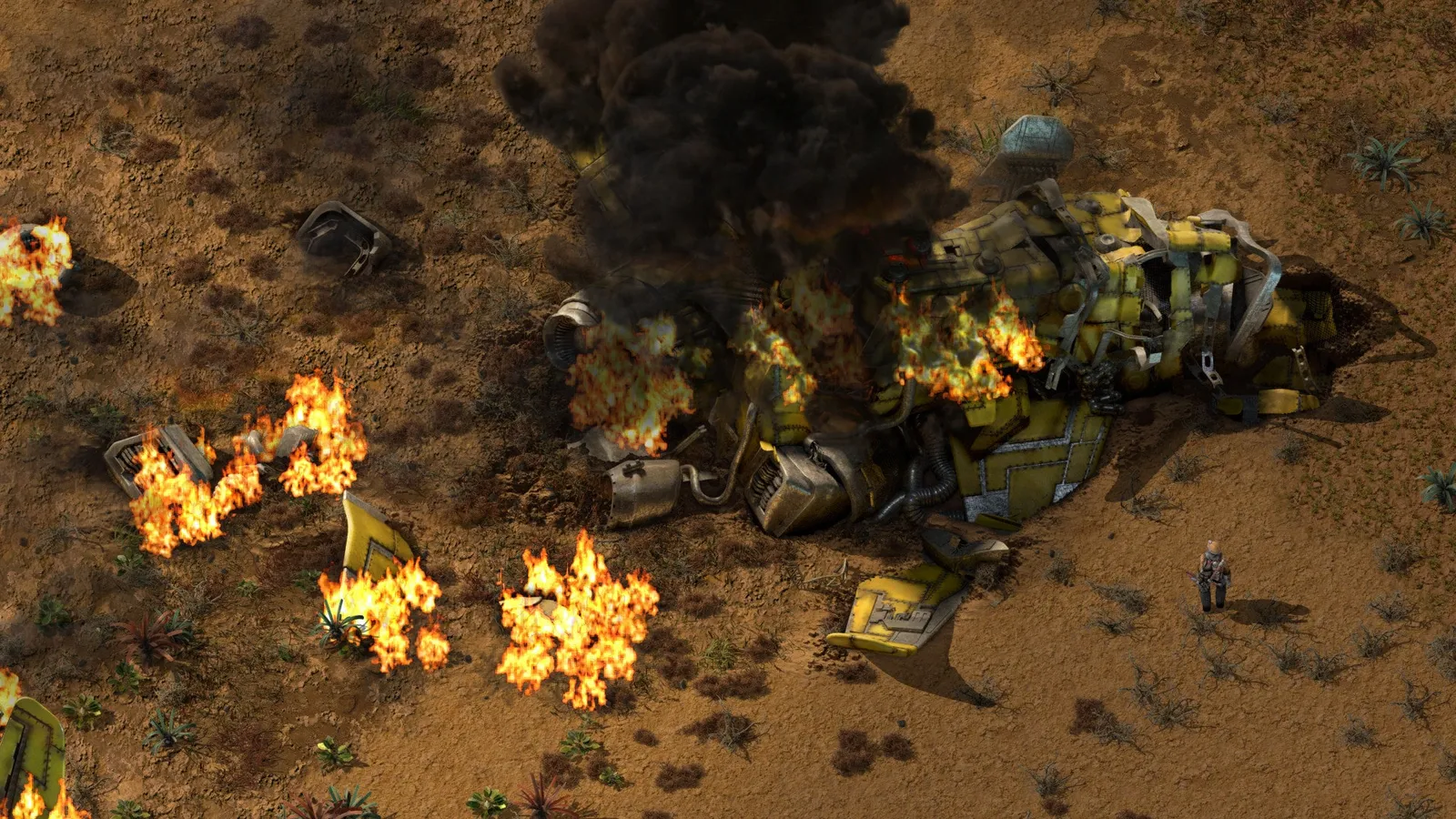
Factorio has the broader factory vocabulary. Belts, inserters, splitters, pipes, trains, robots, circuits, modules, beacons, nuclear power, blueprints, and mods create a huge design space. It is the stronger game if you want the factory itself to be the main object of study.
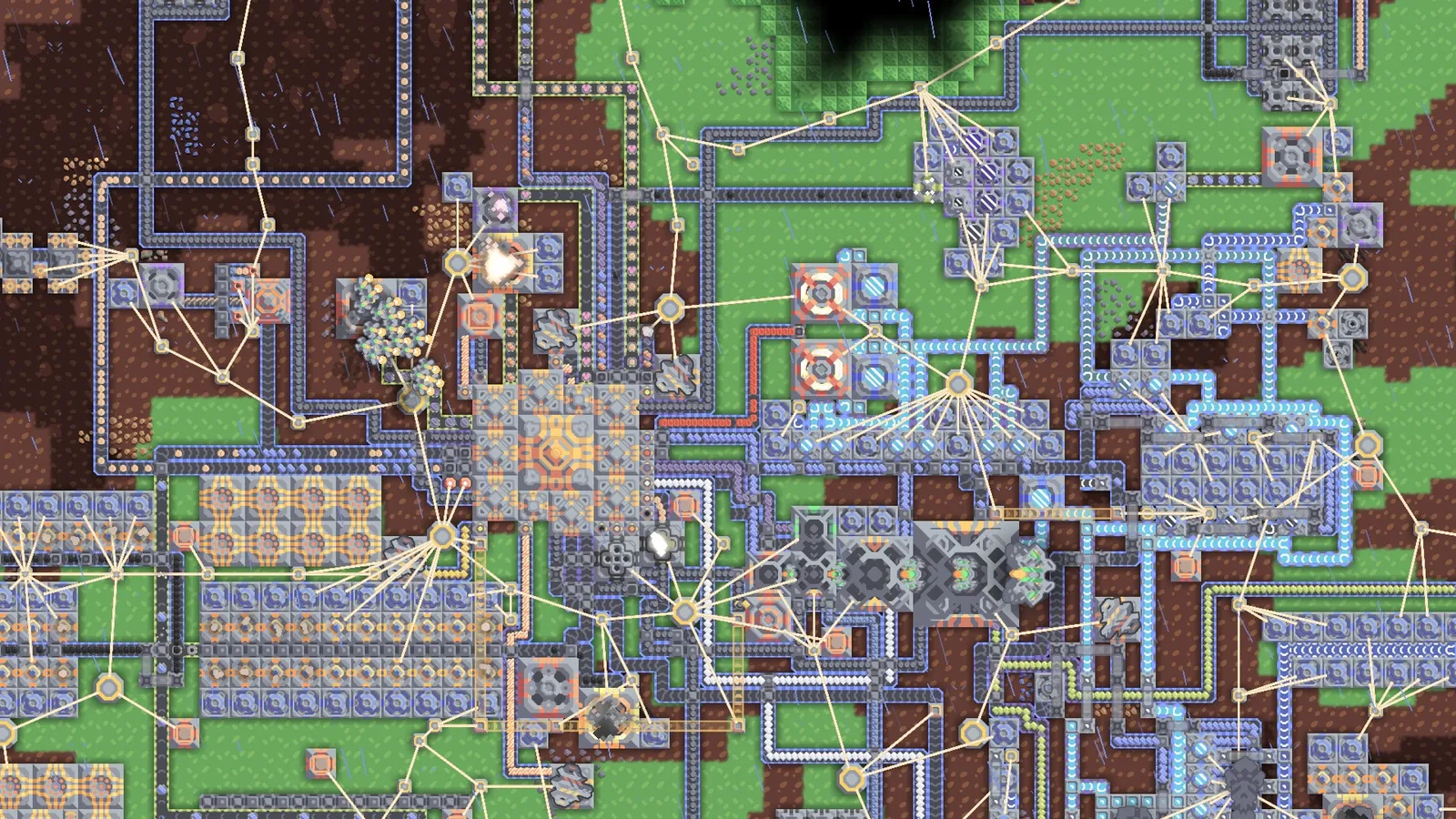
Mindustry is more compact. Its production chains are meaningful, but they are shaped around maps, waves, cores, defensive lines, and unit production. The result is tighter and more urgent, but less sprawling.
Round 3 - Combat and stakes
Mindustry wins.
In Factorio, combat grows out of pollution, expansion, and enemy bases. It can become intense, especially around outposts and artillery, but the factory can also spend long stretches simply improving itself.
In Mindustry, combat is the spine. Ammunition routing, power redundancy, repair, unit production, walls, liquids, and turret placement are all factory decisions. If the line breaks, the production plan was wrong in a visible way.
Round 4 - Session feel
Mindustry wins for shorter sessions. Factorio wins for long projects.
Mindustry's sector structure makes it easier to play in focused bursts. Capture a map, improve defenses, push tech forward, and move on. It has long-term progression, but each map creates a digestible problem.
Factorio is more dangerous to open at night. One small belt fix becomes oil cleanup, oil cleanup becomes rail expansion, rail expansion becomes a new defense perimeter, and suddenly the sun has opinions.
Round 5 - Which should you play?
Choose Factorio if you want the definitive factory automation sandbox: deep logistics, long-term scaling, mods, train systems, blueprints, and a base that grows from awkward hand-feeding into industrial infrastructure.
Choose Mindustry if you want automation with immediate tactical purpose: build supply chains, feed turrets, produce units, defend the core, and solve logistics while the map pushes back.
The verdict
Factorio is the better factory game. Mindustry is the better factory-combat game. That distinction matters.
If you love planning huge production systems, start with Factorio. If you want every conveyor to feel like it belongs in a defensive plan, start with Mindustry. Related reads: Best Automation Games With Combat and Games Like Factorio.