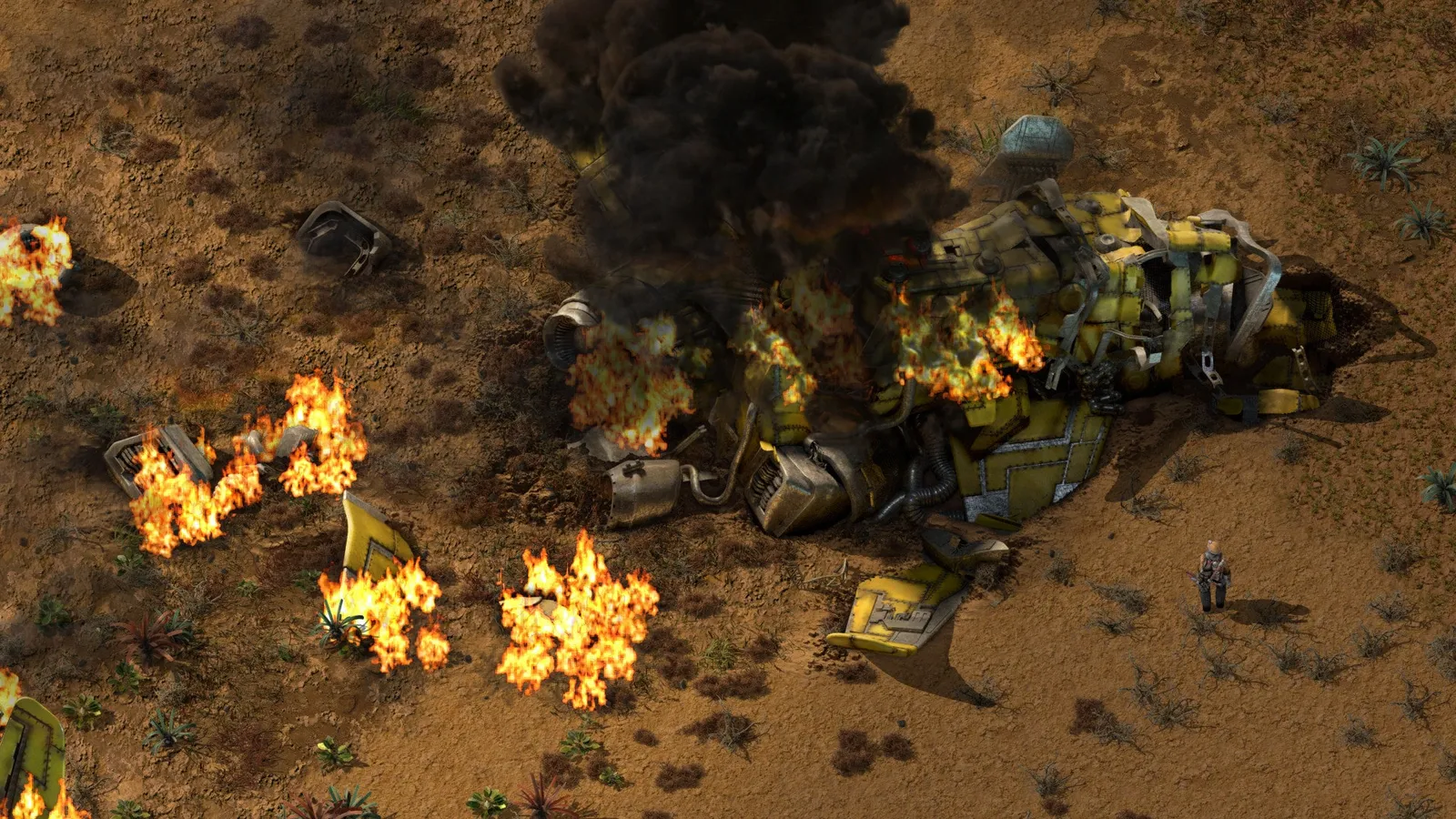
If you want more games like Factorio, start with the reason Factorio worked for you. Was it the belt logic, the trains, the megabase scale, the modding rabbit hole, or the feeling that every bottleneck was a solvable engineering problem?
The closest alternatives are not all clones. Some push the factory into 3D, some move it across planets, and some strip automation down into clean puzzle logic. This list is for players who want the Factorio mindset: build a system, watch it break, improve it, and then scale it until yesterday's solution looks adorable.
Quick picks
| If you liked Factorio for... | Play this next | Why |
|---|---|---|
| Deep factory automation | Dyson Sphere Program | Planet-to-planet logistics and a huge end goal. |
| Co-op and spectacle | Satisfactory | First-person factory building with a world you can walk through. |
| Clean belt puzzles | Shapez 2 | Pure conveyor logic without combat or survival pressure. |
| Factory plus defense | Mindustry | Production lines feed turrets, units, and survival. |
| Industrial consequences | Captain of Industry | Mining, maintenance, fuel, workers, and waste all interact. |
| Voxel first-person building | FOUNDRY | A Satisfactory-like perspective with terrain you can dig through. |
1. Dyson Sphere Program
Dyson Sphere Program is the best next step if Factorio's appeal was scale. The early game feels familiar: miners, smelters, sorters, assemblers, research, power. Then the map stops being the map. You leave the starting planet, build supply chains on other worlds, and use logistics stations to move titanium, silicon, hydrogen, deuterium, and science across a star system.
Factorio players will recognize the bottleneck chase immediately. The difference is emotional scale. Instead of asking whether one train block is backing up, you start asking whether one planet should specialize in smelting, another in oil products, and another in Dyson sphere components. It is less moddable than Factorio and not as brutally precise, but it captures the same hunger for larger, cleaner systems.
2. Satisfactory
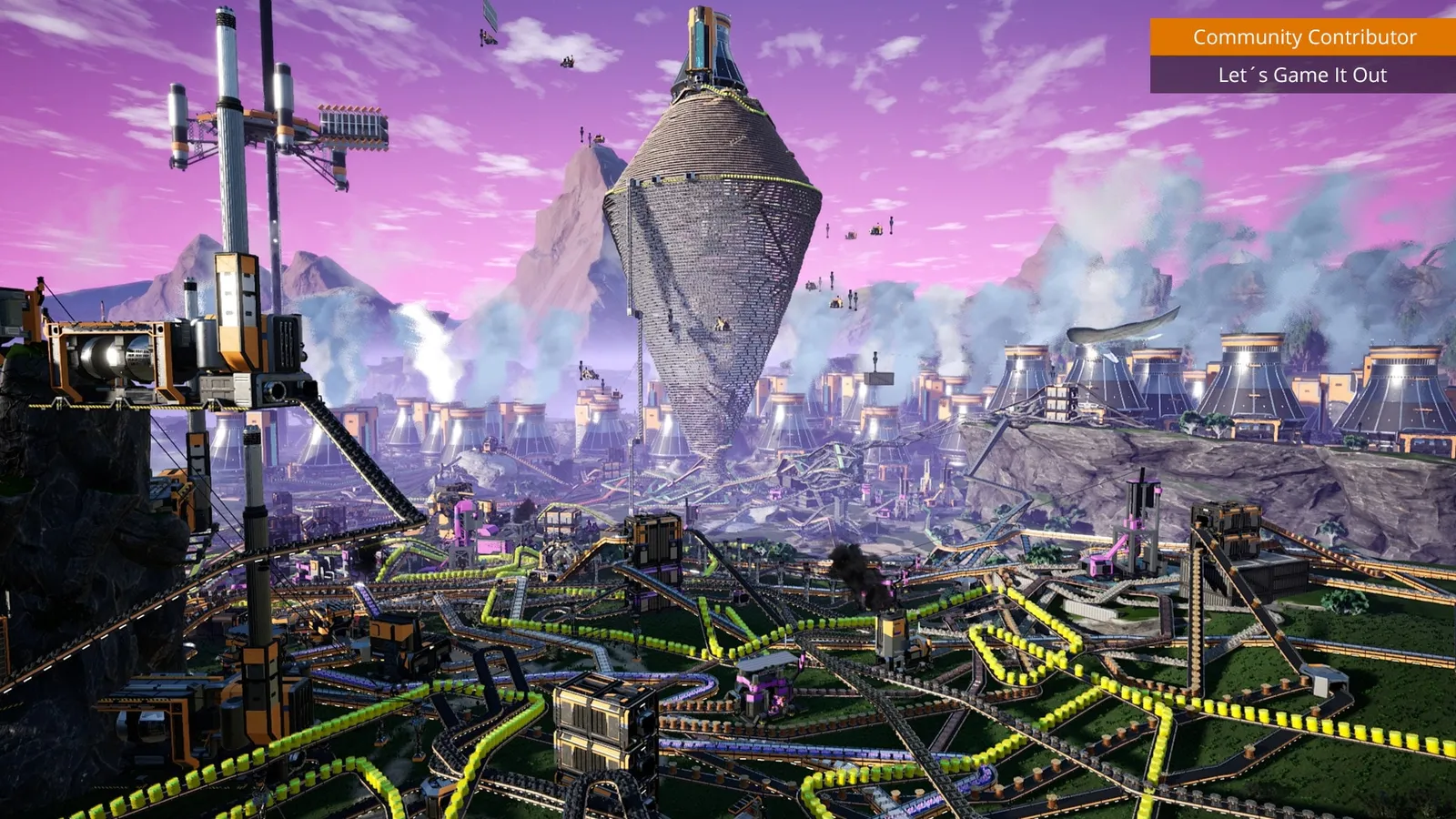
Satisfactory is the obvious answer for "Factorio, but 3D." It is also more than that. First-person movement changes the whole feel of factory planning. A bad belt line is not just ugly from above; it is a corridor you have to walk through, climb around, or rebuild into a vertical production floor.
It is not as deep as Factorio at the circuit-and-megabase end of the spectrum, but it is more inviting, more spatial, and much better when you want a co-op project that looks impressive while it works. If you bounced off Factorio's top-down abstraction but still love production chains, Satisfactory is the safest recommendation.
For a direct comparison, read Factorio vs. Satisfactory.
3. Shapez 2
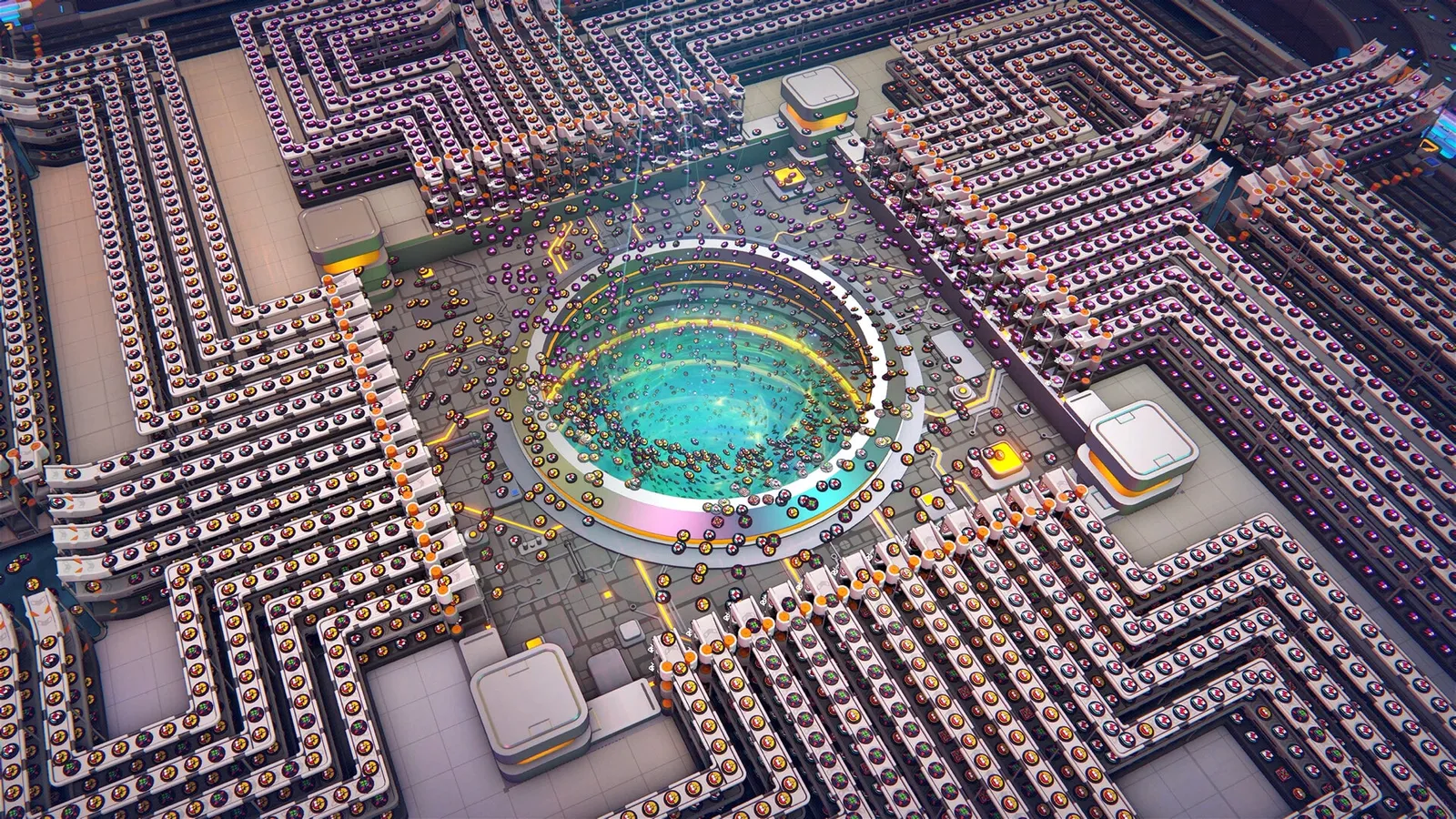
Shapez 2 is what happens when you remove everything around the factory and leave the logic exposed. No biters. No handcrafting grind. No ore patch anxiety. Just belts, cutters, painters, stackers, trains, and shape recipes that slowly force better layouts.
That makes it one of the best games like Factorio for players who enjoy optimization but do not always want pressure. It is also a strong recommendation for new players who want to learn the grammar of automation before moving into heavier industrial simulations.
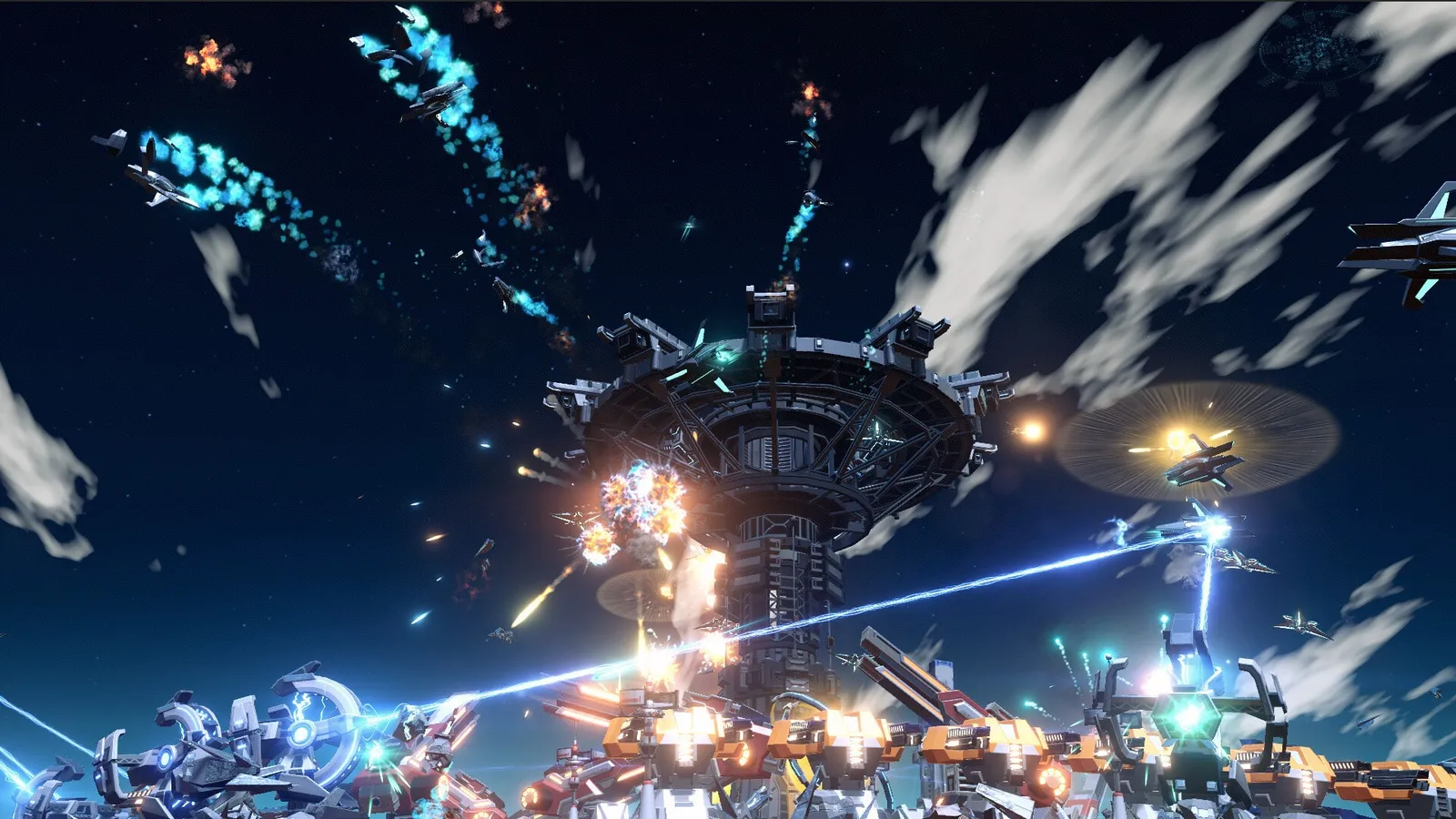
4. Mindustry
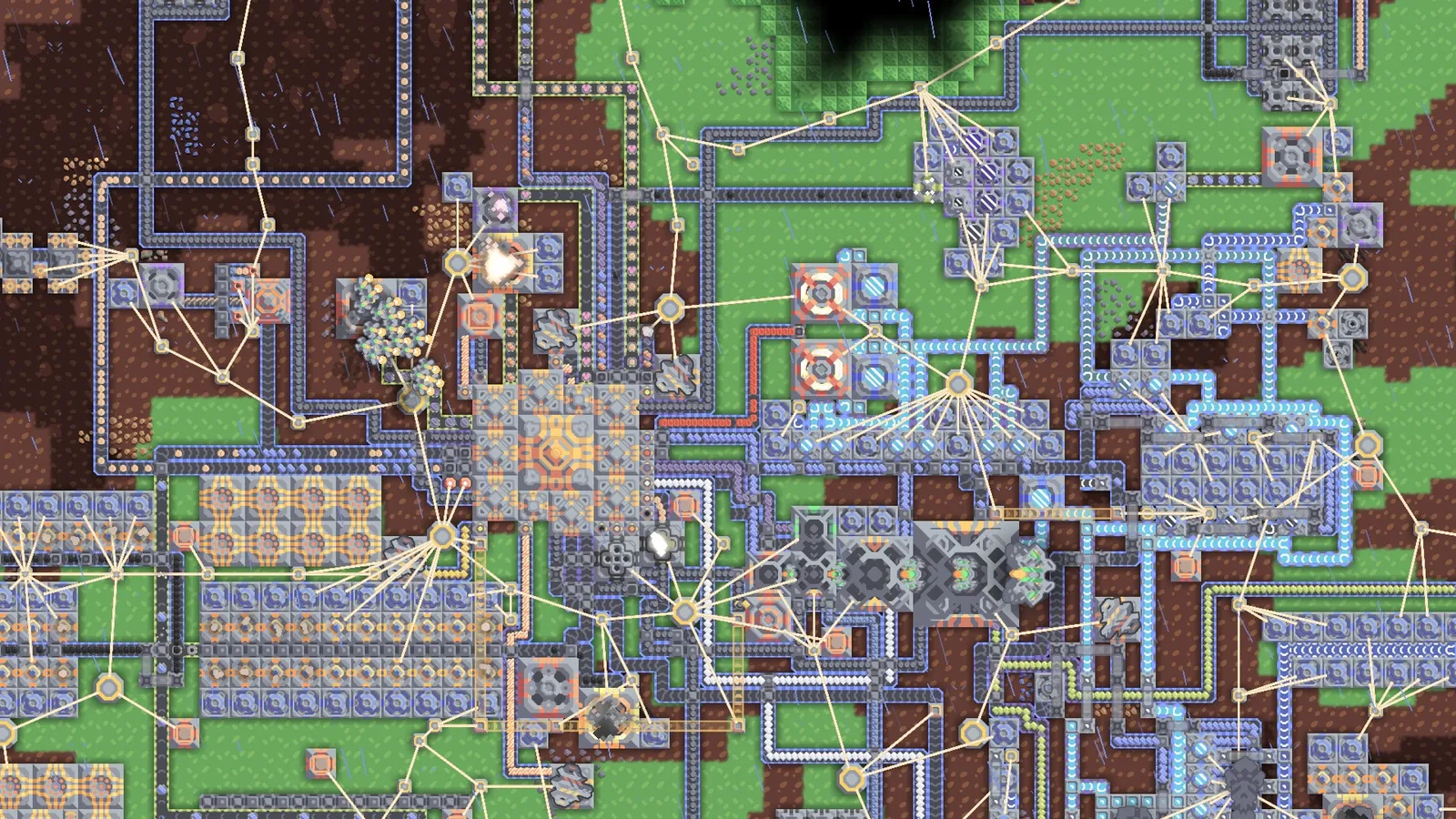
Mindustry is Factorio with the defensive layer pushed to the front. Your conveyors do not just feed science packs. They feed turrets, walls, unit factories, and survival. A resource shortage is not a future efficiency problem; it can become a breach.
That pressure makes Mindustry feel sharper and more tactical. The factory is smaller and more combat-shaped than a Factorio megabase, but the constant link between production and defense gives it a distinct identity. It is also one of the easiest recommendations for players who want a cheaper entry point into the genre.
5. Captain of Industry
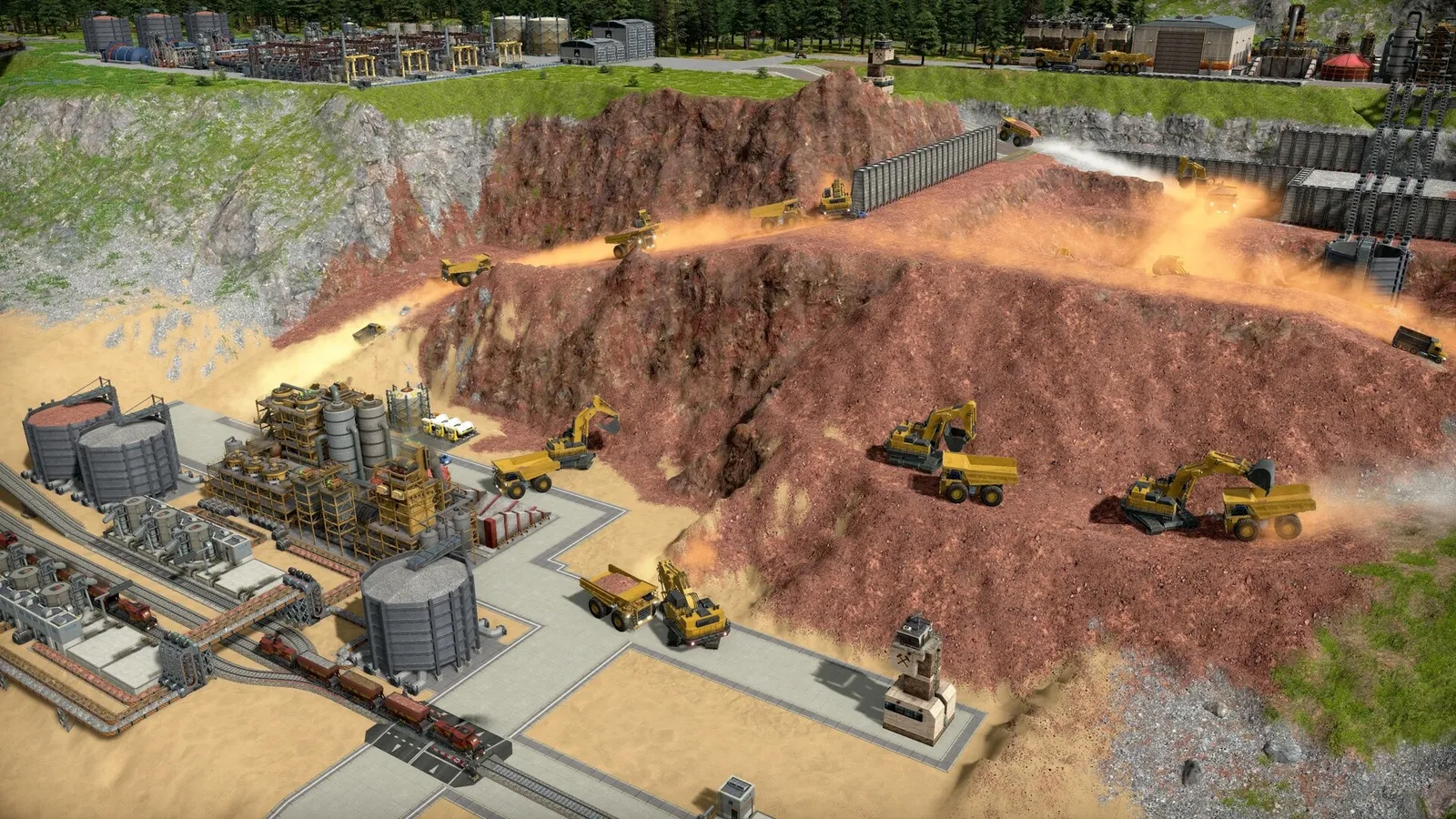
Captain of Industry is less about perfect belt geometry and more about industrial dependency. Excavators need fuel and maintenance. Workers need food and housing. Trucks, conveyors, pipes, waste, power, ports, farms, and research all tug on each other.
Factorio players who like cascading problems will feel at home. The pleasure is not just making more items per minute, but keeping an island-sized industrial settlement alive when one missing input can ripple through the whole economy.
6. FOUNDRY
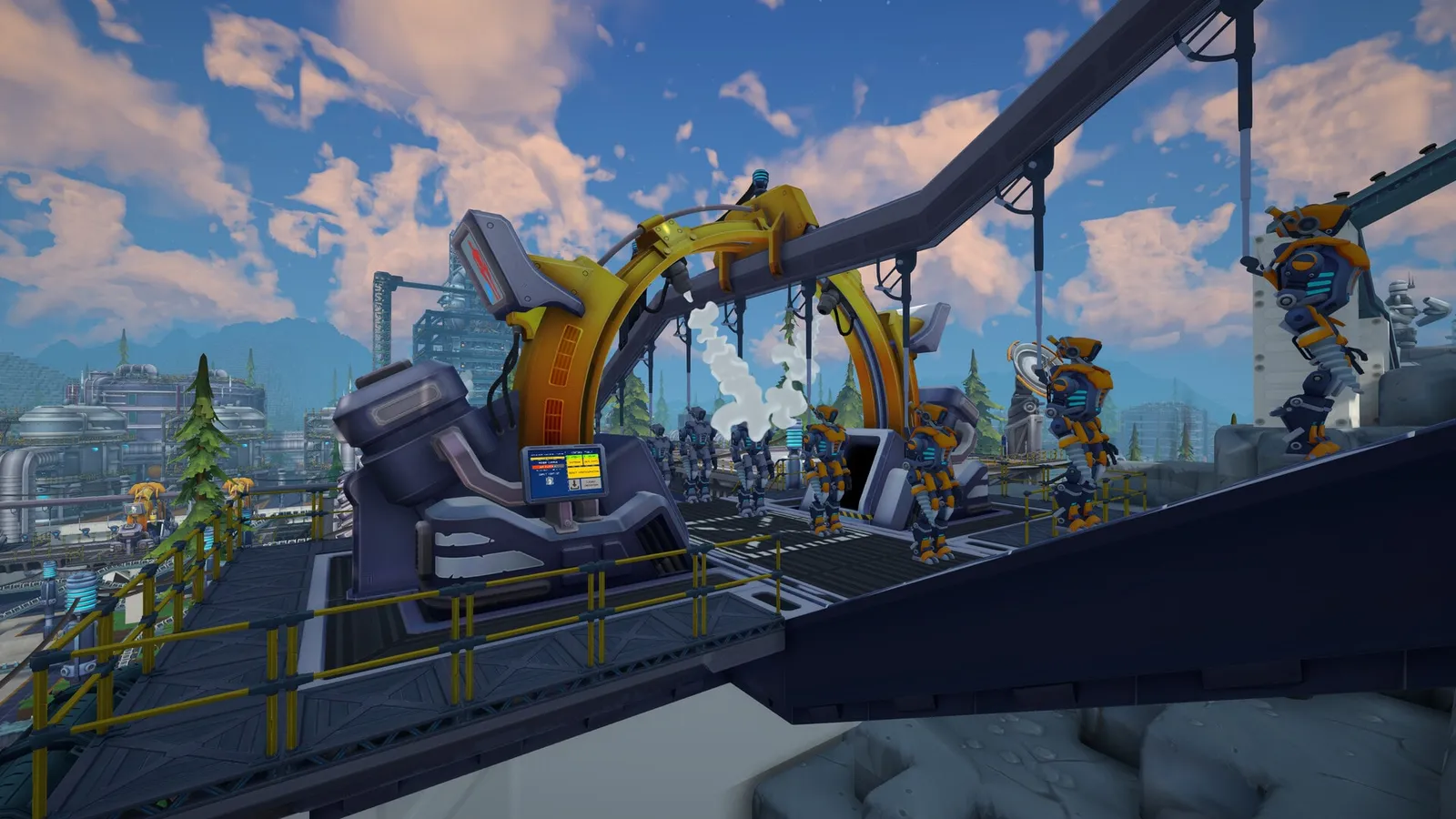
FOUNDRY is a strong pick if you want the first-person feel of Satisfactory but with voxel digging and underground routing. You mine through the planet, carve out space for machines, build lifts and belts through vertical layers, and slowly turn raw terrain into a production site.
It is not trying to beat Factorio at Factorio's own top-down precision. Its pitch is more physical: the factory exists inside a world you can reshape. That makes layout a spatial problem in a way Factorio fans may find refreshing.
Other strong Factorio alternatives
Techtonica is worth a look if you want an underground first-person factory with exploration and co-op. Factory Town softens the genre into a cozy logistics town builder. Final Factory moves production into modular space stations. Desynced replaces belts with programmable robots and mobile logistics.
Which should you play first?
If you want the closest large-scale factory high, choose Dyson Sphere Program. If you want co-op and 3D building, choose Satisfactory. If you want the gentlest pure automation loop, choose Shapez 2. If you want production under attack, choose Mindustry.
The full ranked list is in The Best Automation Games of 2026, and every catalog entry is filterable from the Automation Games catalog.