Belts are the heart of most factory games because they make automation visible. They carry the proof that the machine works. But every serious factory eventually reaches a point where more belts are not the answer.
That does not mean belts become bad. It means the problem has changed. You are no longer solving "how do I move this item from here to there?" You are solving distance, volume, flexibility, rebuild cost, and coordination.
The warning signs
| Sign | What it usually means | Next tool to consider |
|---|---|---|
| Belts run across half the map | Distance is becoming the problem | Trains, drones, vehicles, logistics stations |
| Every upgrade requires rerouting everything | The layout is too tightly coupled | Modules, blueprints, separated production blocks |
| Belts are full but machines still starve | Throughput is not reaching the right place | Buffers, splitters, priority rules, local production |
| Rare items clog common routes | Not all items deserve belt lanes | Bots, drones, trains, request systems |
| The factory is hard to read | Transport has become noise | Districts, labels, train blocks, cleaner modules |
Belts are best at local flow
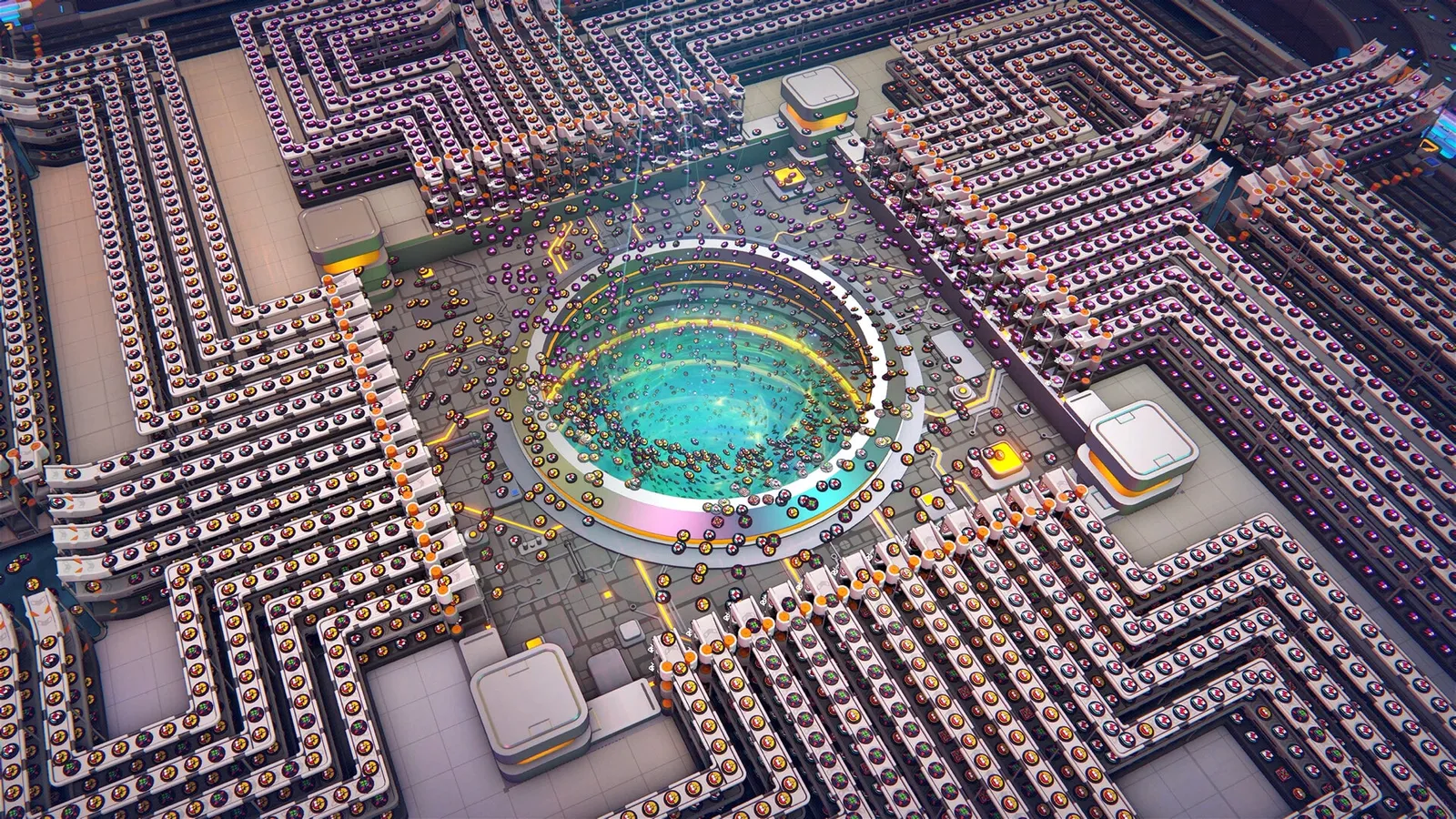
Belts are excellent when machines are close together and the item rate is predictable. In Factorio, belts make smelting, circuits, science, and intermediate production easy to inspect. In shapez 2, belts are the whole language of transformation.
The reason is visibility. A belt tells the truth. If it is empty, something upstream failed. If it is backed up, something downstream cannot consume enough. If it is mixed, somebody made a decision and now everyone has to live with it.
Distance changes the math
A belt across a small factory is clarity. A belt across a continent is often a symptom. Long belts cost space, create rebuild pain, and turn the map into a transport scar. They can still be correct, especially in games built around belts, but the question changes.
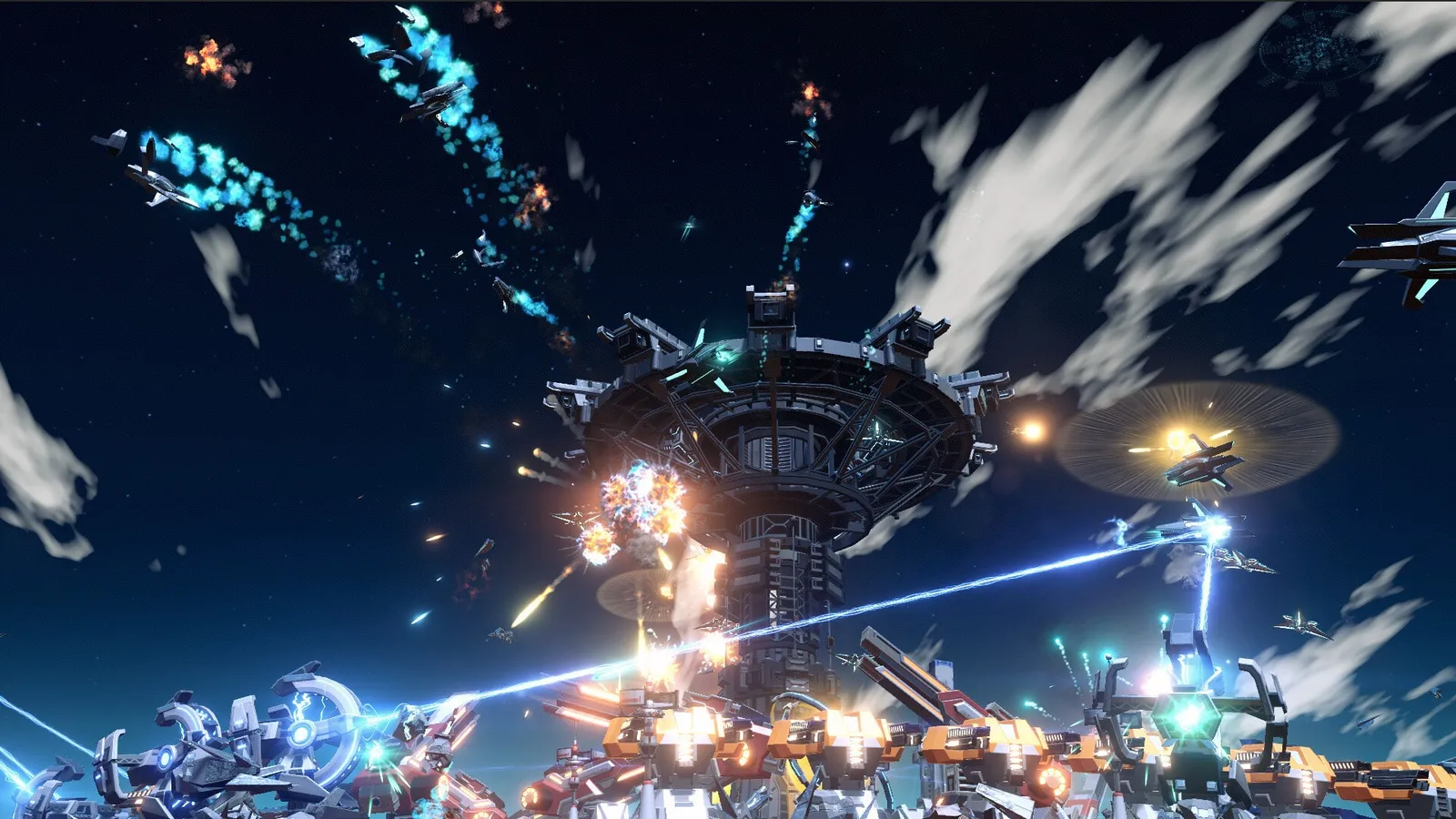
When resources are far away, a train or logistics station often solves the real problem better. Dyson Sphere Program makes this obvious when planetary belts give way to logistics towers and interstellar vessels. Factorio does it with trains and outposts.
Volume changes the shape of the factory
Belts can move a lot, but not everything should be solved by adding more lanes. More belts mean more width, more splitters, more balancing, more crossings, and more places for the factory to become unreadable.
At high volume, it often helps to move production closer to the resource, ship denser intermediate products, or break the factory into modules. Instead of belting ore forever, smelt near the mine. Instead of moving every ingredient to one central place, build a local subfactory that exports only what matters.
Flexibility has value too
Some items are too awkward for permanent belts. Low-volume components, repair supplies, construction materials, and late-game odds and ends often work better with bots, drones, or request systems. A belt lane is a promise. If the item is rarely needed, that promise may be expensive.
In Satisfactory, drones can make sense for high-value, lower-volume items. In Factorio, bots are excellent for construction, repairs, and flexible delivery inside a controlled area. The point is not that bots replace belts. They replace belts where belts are the wrong kind of commitment.
The clean transition
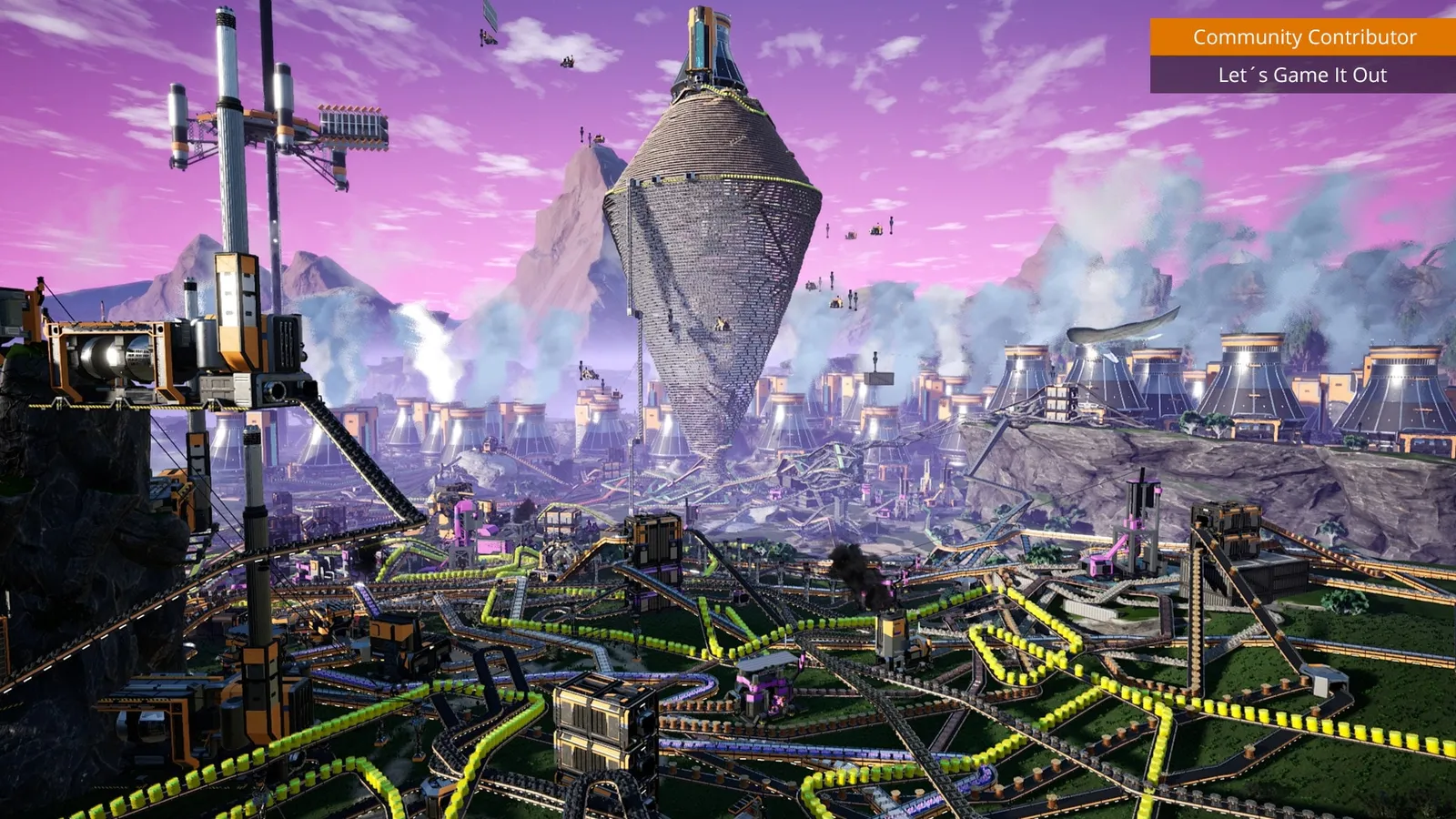
A healthy factory usually grows through layers. Belts handle local production. Trains or logistics stations handle distance. Bots and drones handle flexible delivery. Modules keep repeated work contained. The factory becomes easier to manage because each transport style has a job.
The trouble starts when one tool tries to do every job. Belts can carry a factory surprisingly far, but the moment they start hiding the plan instead of revealing it, it is time to change the design.
The practical rule
Use belts when they make the factory easier to understand. Stop relying on belts when they make the factory harder to change.
That is the simplest test. Belts are not beginner tools. They are clarity tools. When clarity disappears, the next layer of logistics has earned its place.
Related reads: Belts, Bots, Trains, Main Bus vs Modular Factories, and Best Automation Games With Vehicles.