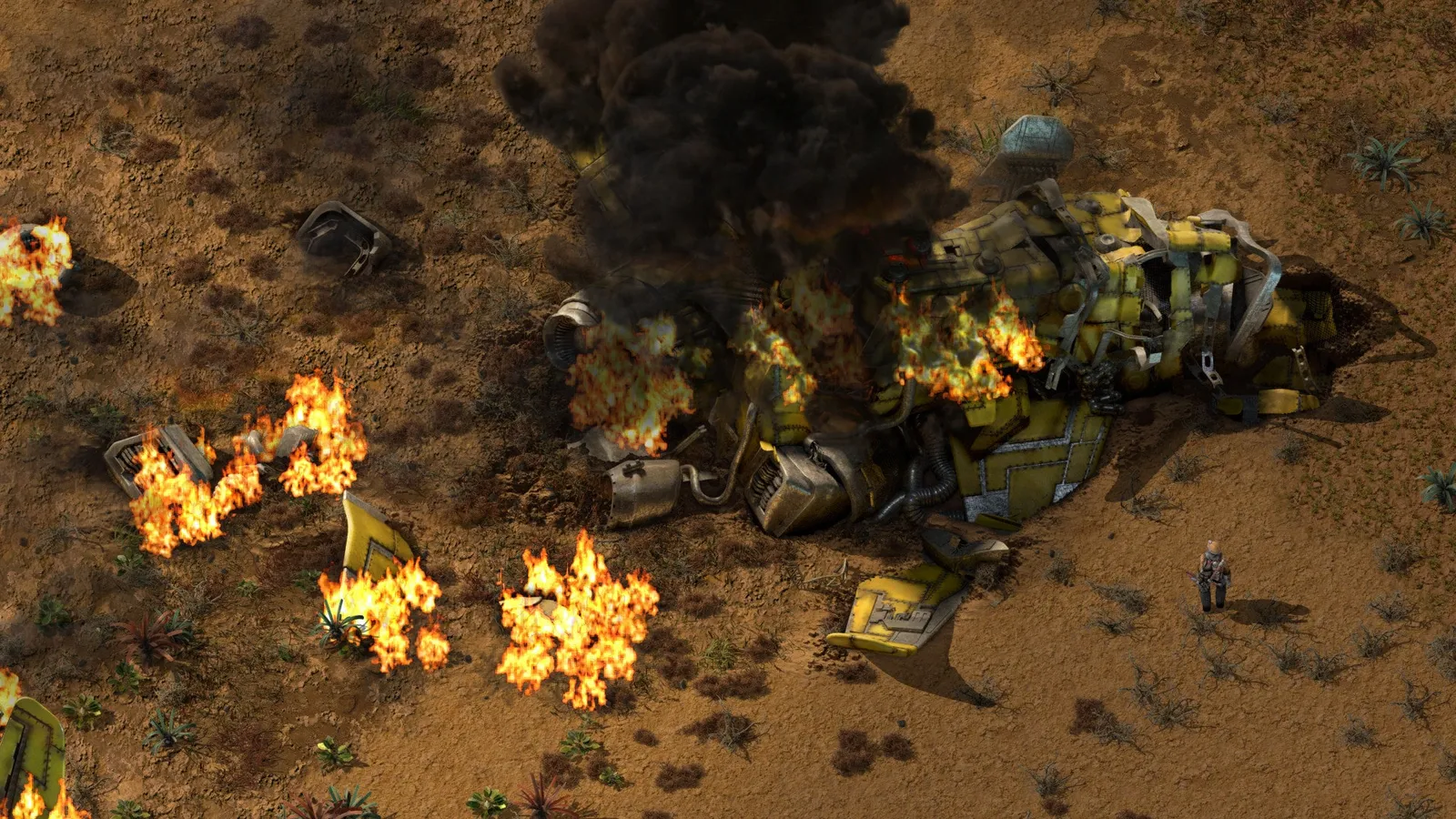
Finishing Factorio creates an awkward problem: most factory games are either too small, too soft, too messy, or too different. The trick is not to find "Factorio again." The trick is to decide which part of Factorio you want to chase next.
Was it the belts? The trains? The pressure? The mods? The feeling of a base turning into infrastructure? Different answers lead to different games.
Start here
| If you miss... | Play | Why |
|---|---|---|
| Giant production scale | Dyson Sphere Program | Planetary factories and interstellar logistics. |
| Walking through your factory | Satisfactory | First-person scale, terrain, co-op, trains, drones, and spectacle. |
| Clean belt logic | shapez 2 | Pure production design without combat or resource friction. |
| Combat logistics | Mindustry | Factory supply chains tied directly to defense and units. |
| Industrial management | Captain of Industry | Mining, terrain, workers, food, trade, and heavier industry. |
If you want bigger scale: Dyson Sphere Program
Dyson Sphere Program is the natural next step if the best part of Factorio was watching a factory outgrow its starting patch. The early game has familiar parts: miners, belts, smelters, assemblers, research, and power. The identity arrives when one planet stops being enough.
Interplanetary logistics gives you a new version of the train problem. Instead of stations across a continent, you build stations across a star system. Titanium on one planet, silicon on another, hydrogen somewhere else, and a growing sphere project pulling everything together.
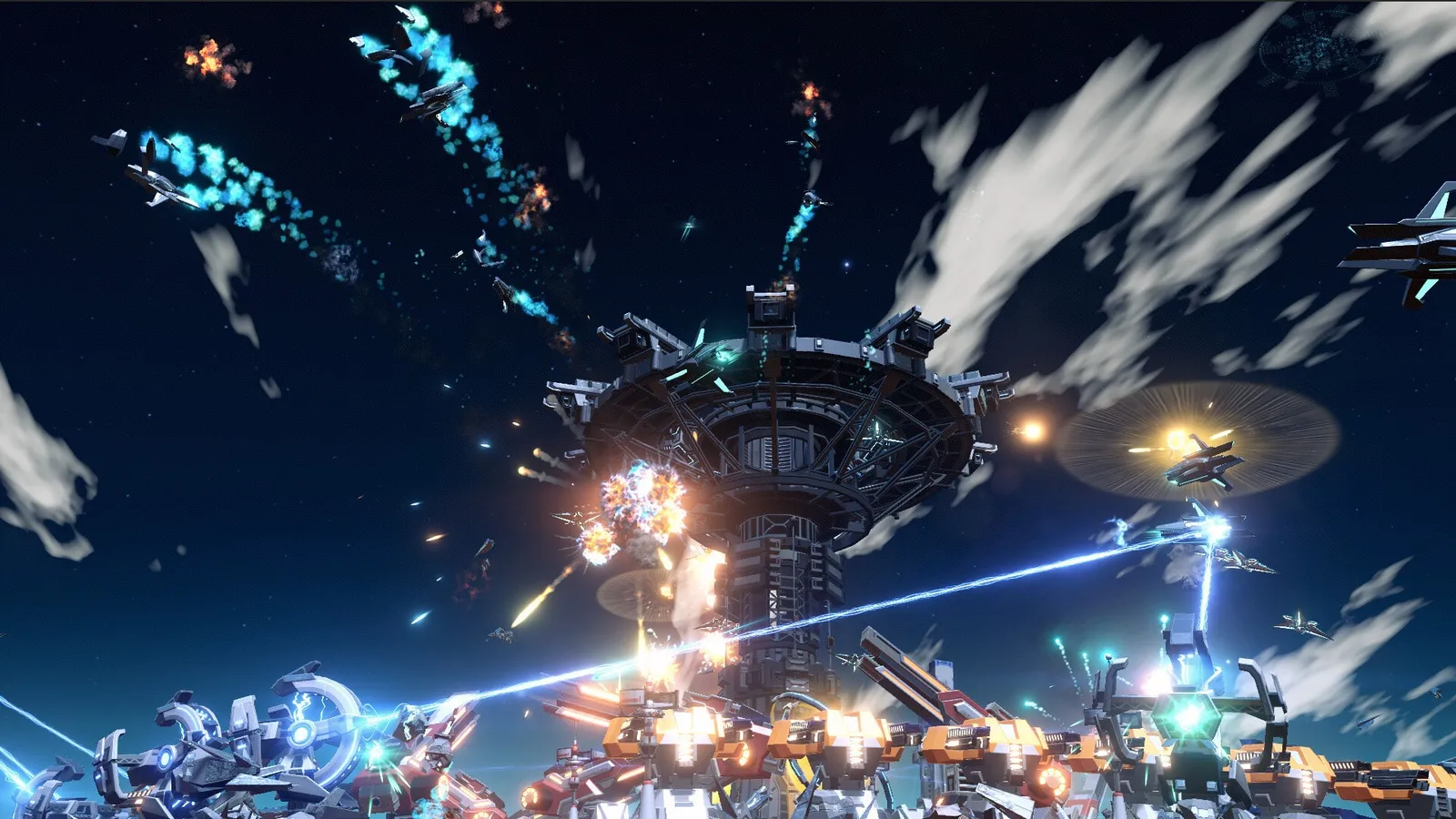
If you want physical scale: Satisfactory
Satisfactory does not replace Factorio's precision. It changes the camera and makes the factory a place. Belts become highways you can walk under. Power plants become districts. Train lines cut through cliffs. A bad layout is not only inefficient; it is something you have to physically navigate.
Play Satisfactory if you want exploration, co-op building, vertical factories, and the pleasure of standing inside the machine.
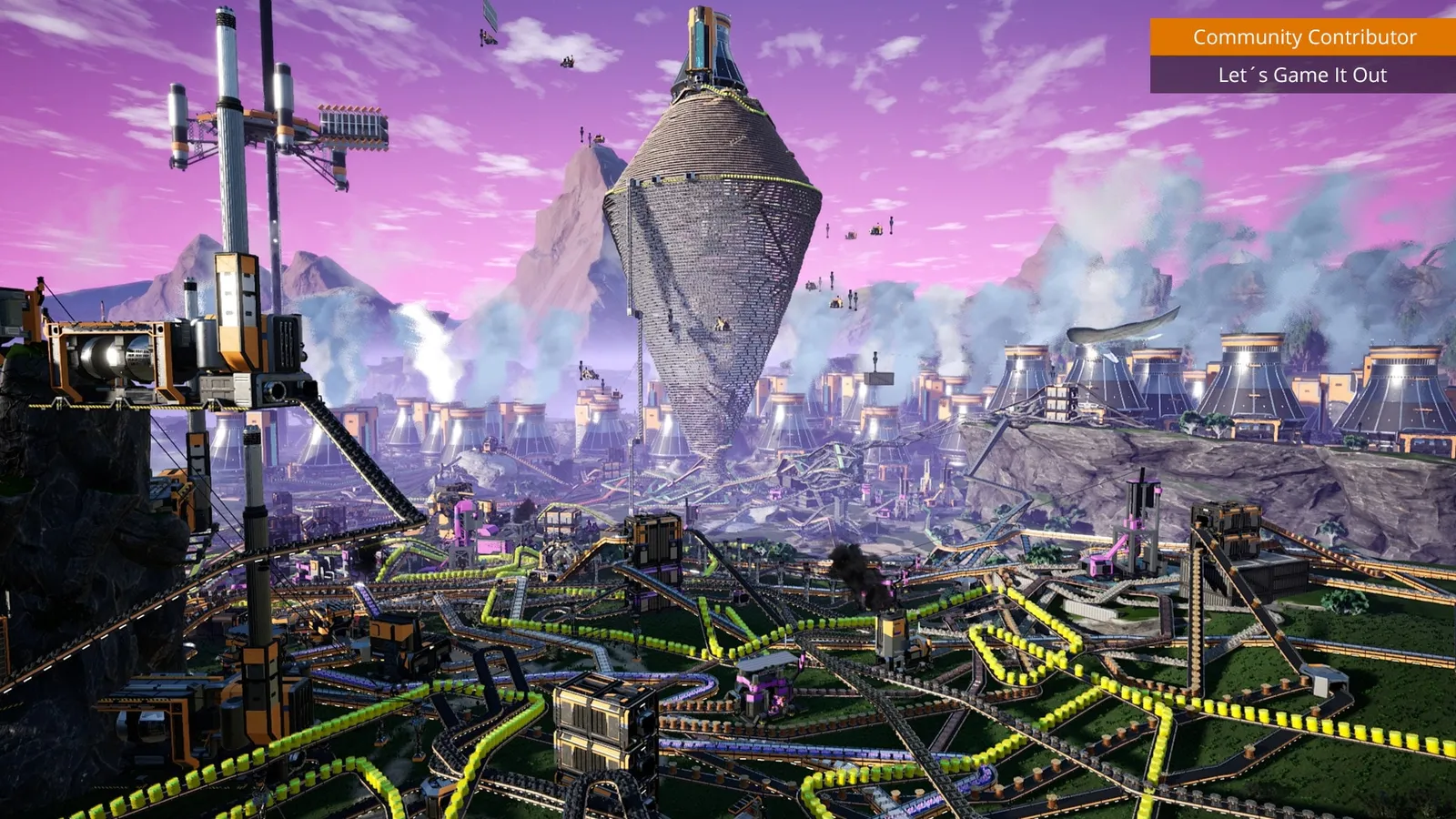
If you want pure belt logic: shapez 2
shapez 2 is what happens when factory automation is stripped down to transformations and flow. No enemies, no hand-mining grind, no expensive rebuilds. Just shapes, belts, cutters, painters, stackers, trains, blueprints, and the pleasure of making a layout cleaner.
It is a strong palate cleanser after Factorio because it keeps the optimization brain active while removing survival pressure.
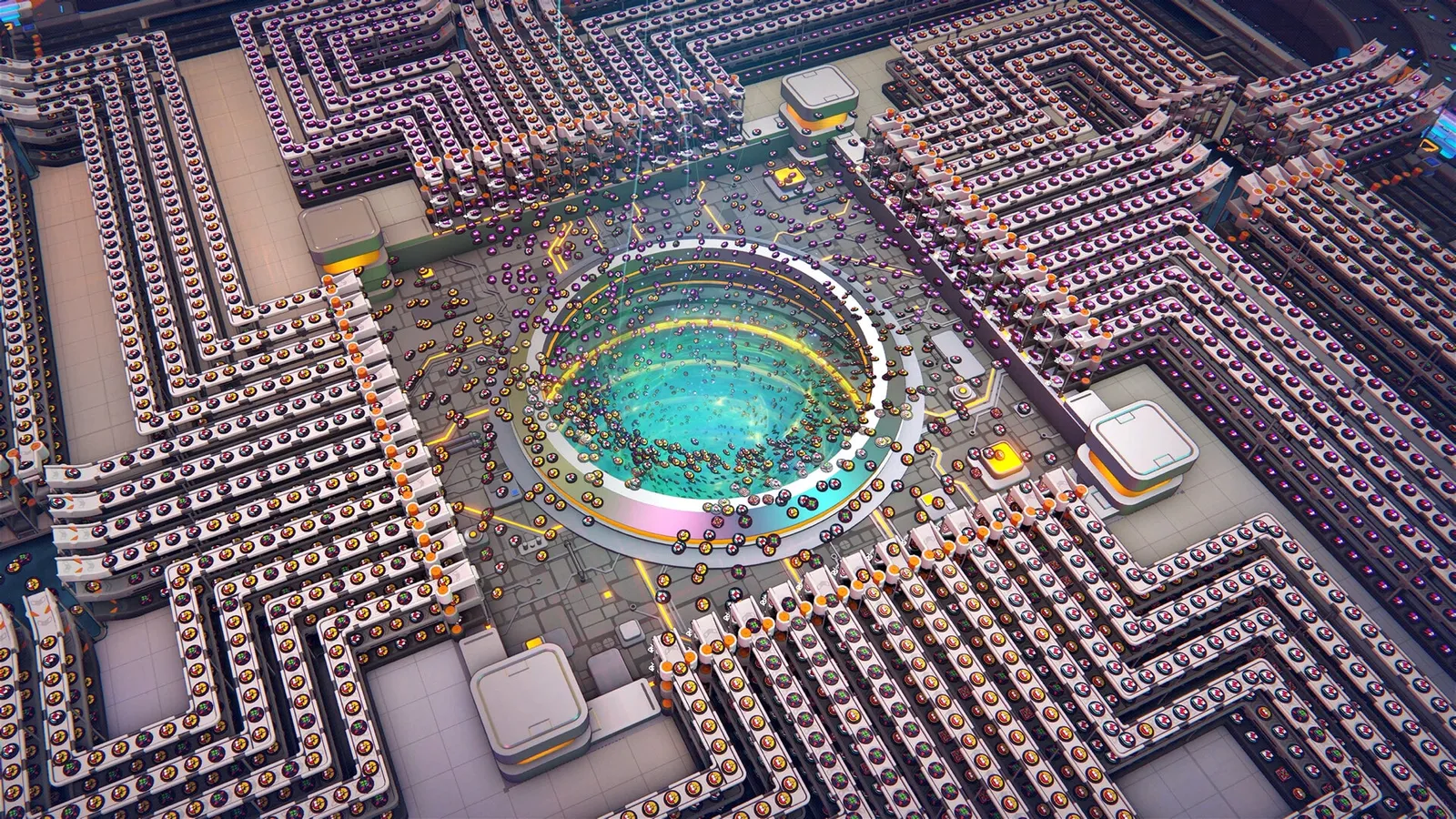
If you want combat to matter more: Mindustry
Factorio has combat, but Mindustry makes combat the structure. Every conveyor, power node, ammo feed, liquid line, and unit factory matters because the enemy is coming and the core needs to survive.
Mindustry is better for shorter, sharper sessions. It feels less like one endless megabase and more like a series of tactical factory problems.
If you want industry to feel heavier: Captain of Industry
Captain of Industry is the pick if Factorio made you curious about a less abstract industrial world. It adds terrain excavation, workers, food, trucks, waste, settlement needs, farming, and trade. The factory is not just a machine. It is an island economy.
That makes it slower and less elegant than Factorio, but also more grounded. A failed chain can hurt the whole settlement, not just one science pack.
Other good directions
FOUNDRY is worth a look if you want first-person automation with voxel terrain. Techtonica is better if underground exploration sounds appealing. Desynced is the interesting turn if robots and behavior logic sound better than belts.
The main mistake is looking only for a clone. Factorio is unusually complete. The better question is which part you want to amplify next: scale, space, calm optimization, combat, trains, co-op, or industrial management.
Related reads: Games Like Factorio, Factorio vs Dyson Sphere Program, and shapez 2 vs Factorio.